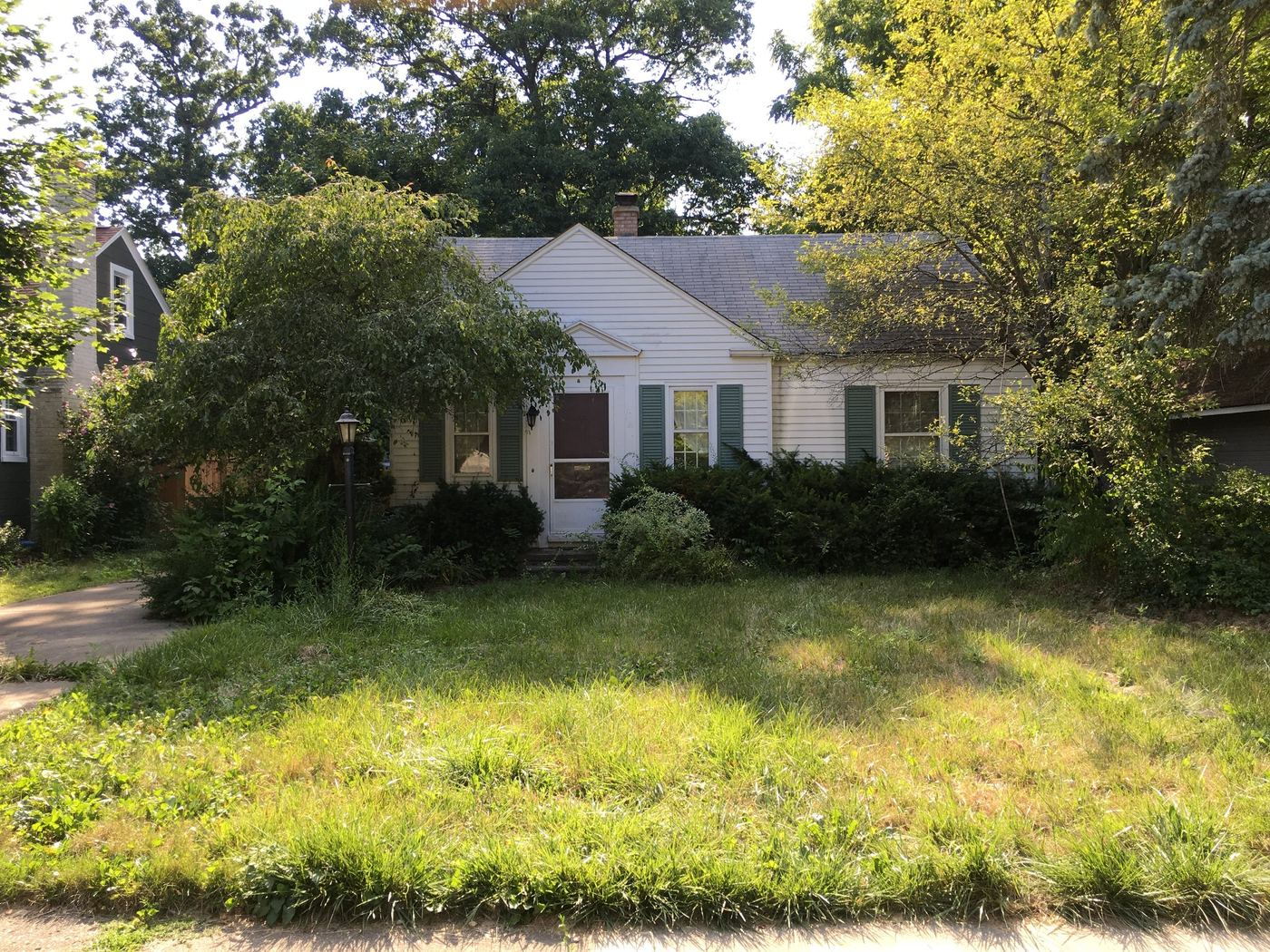
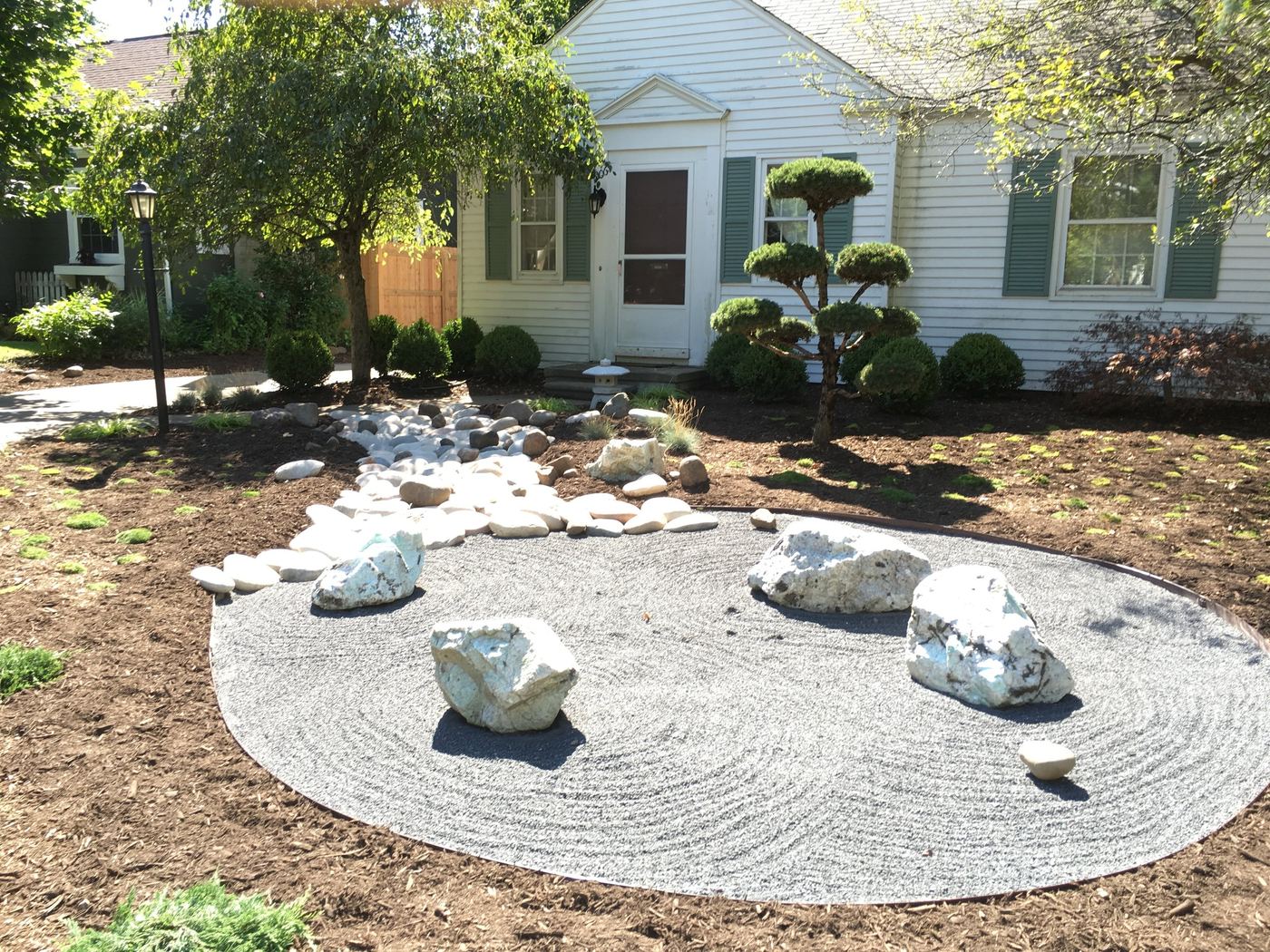
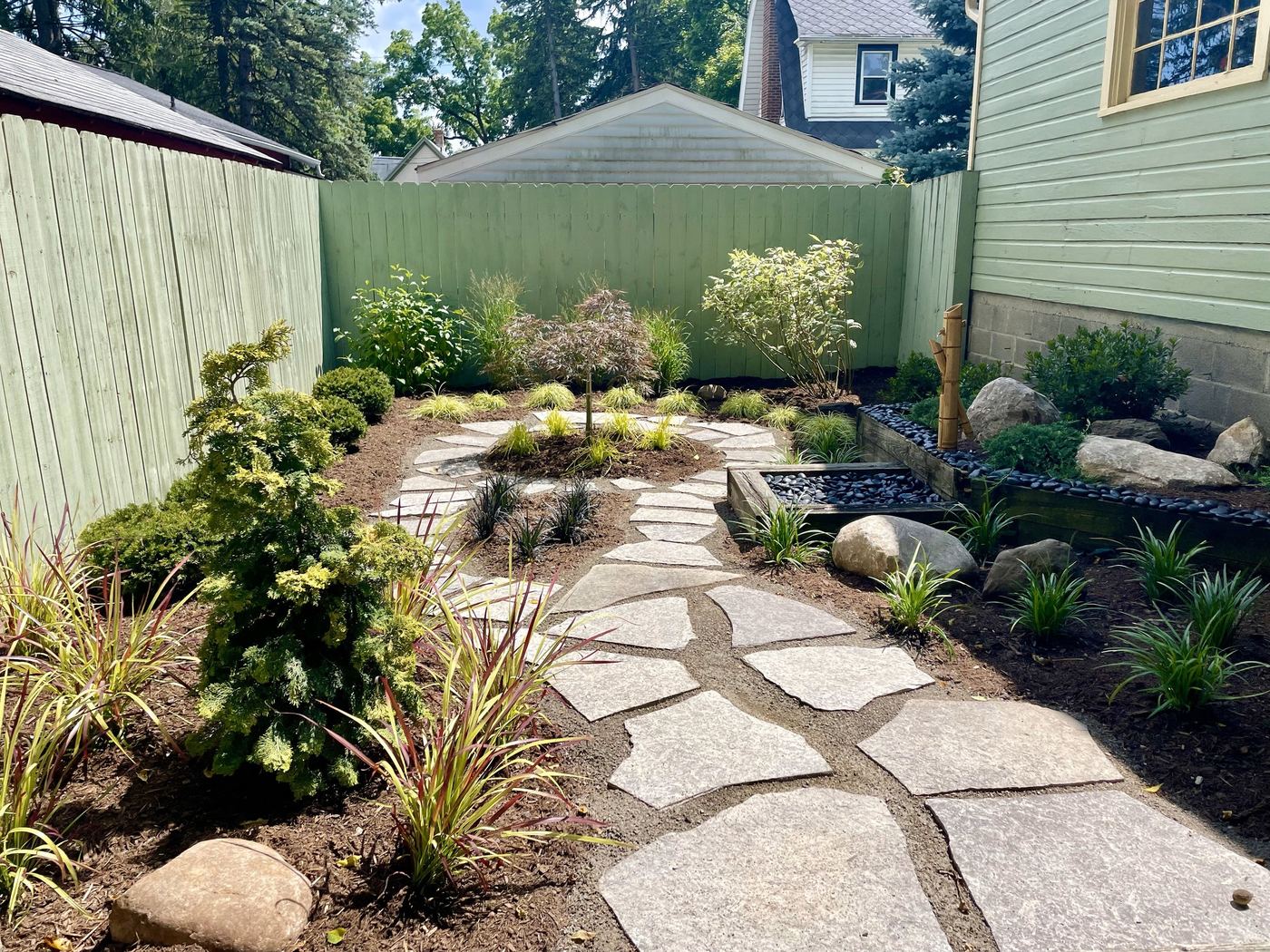
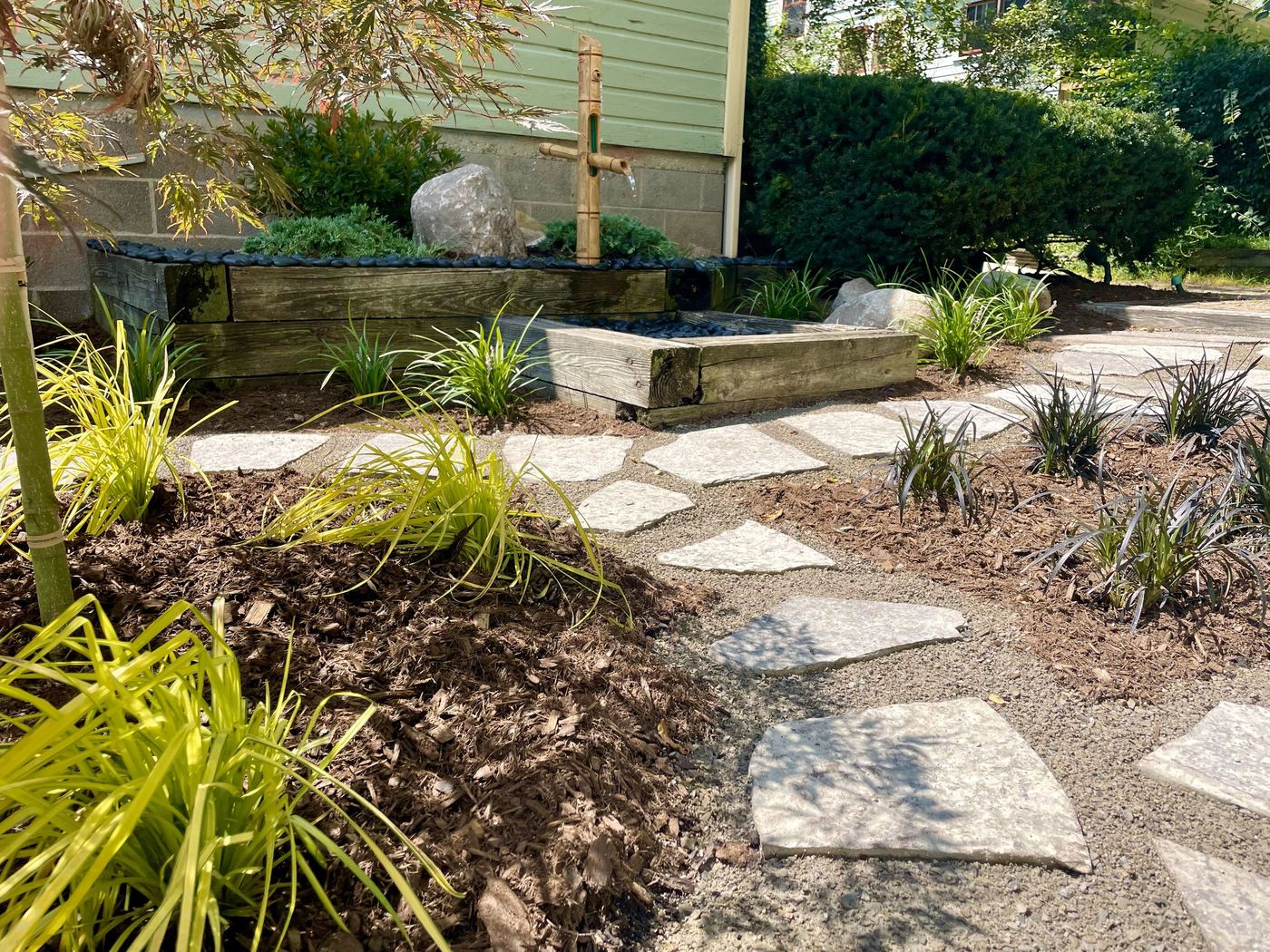
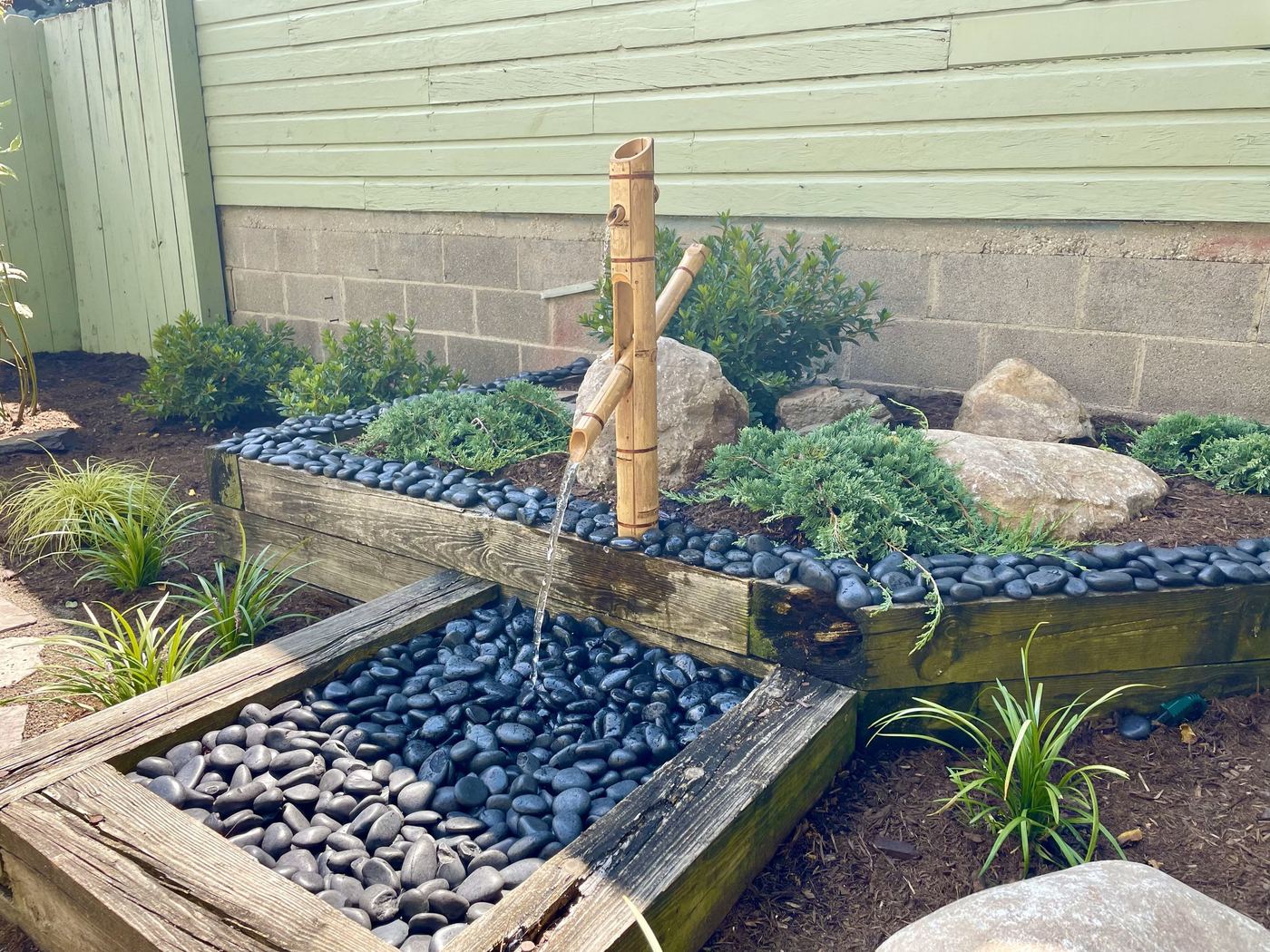
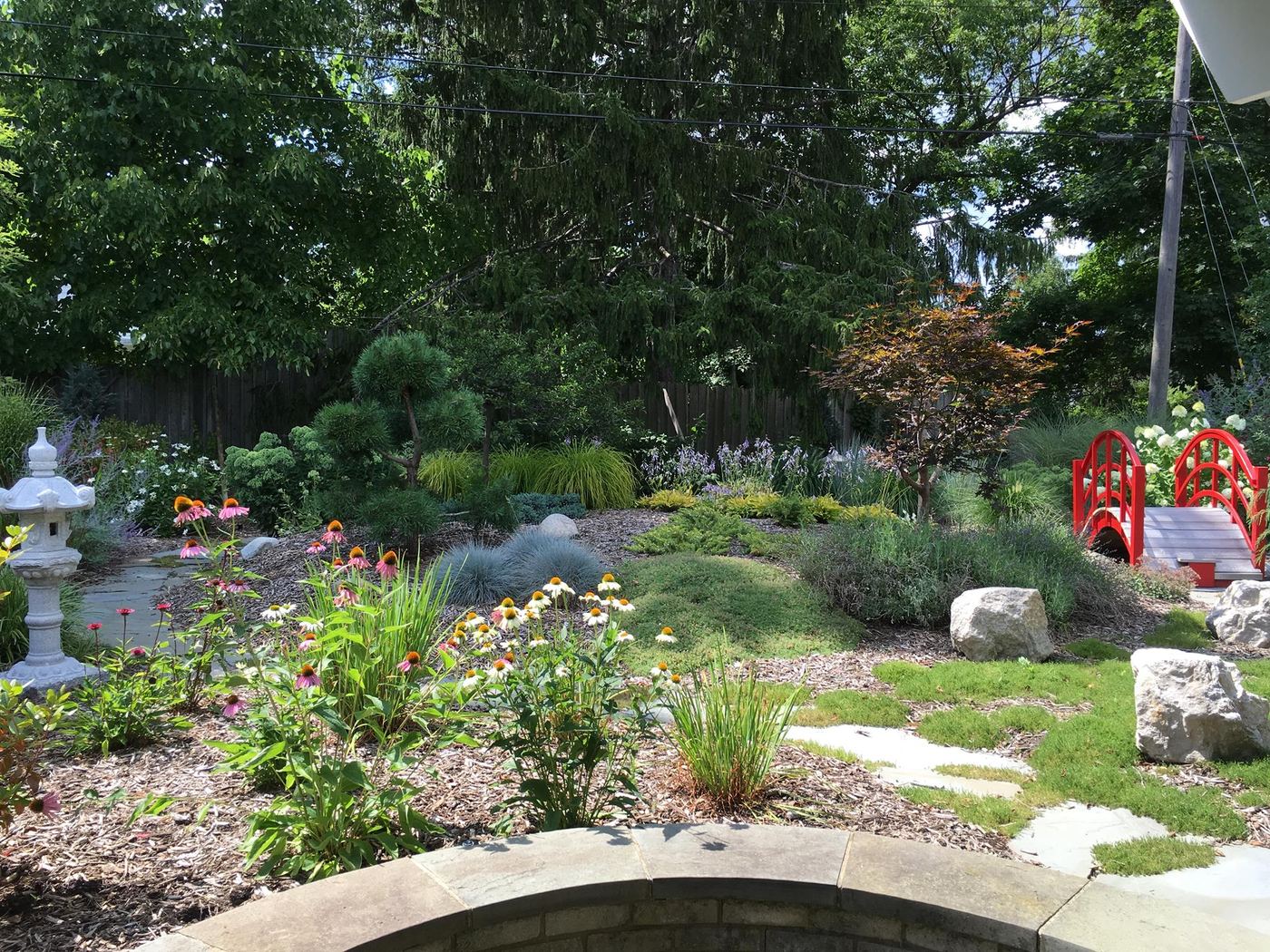
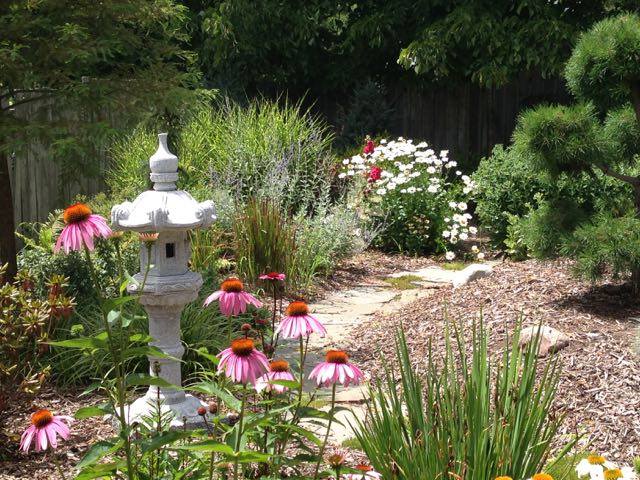
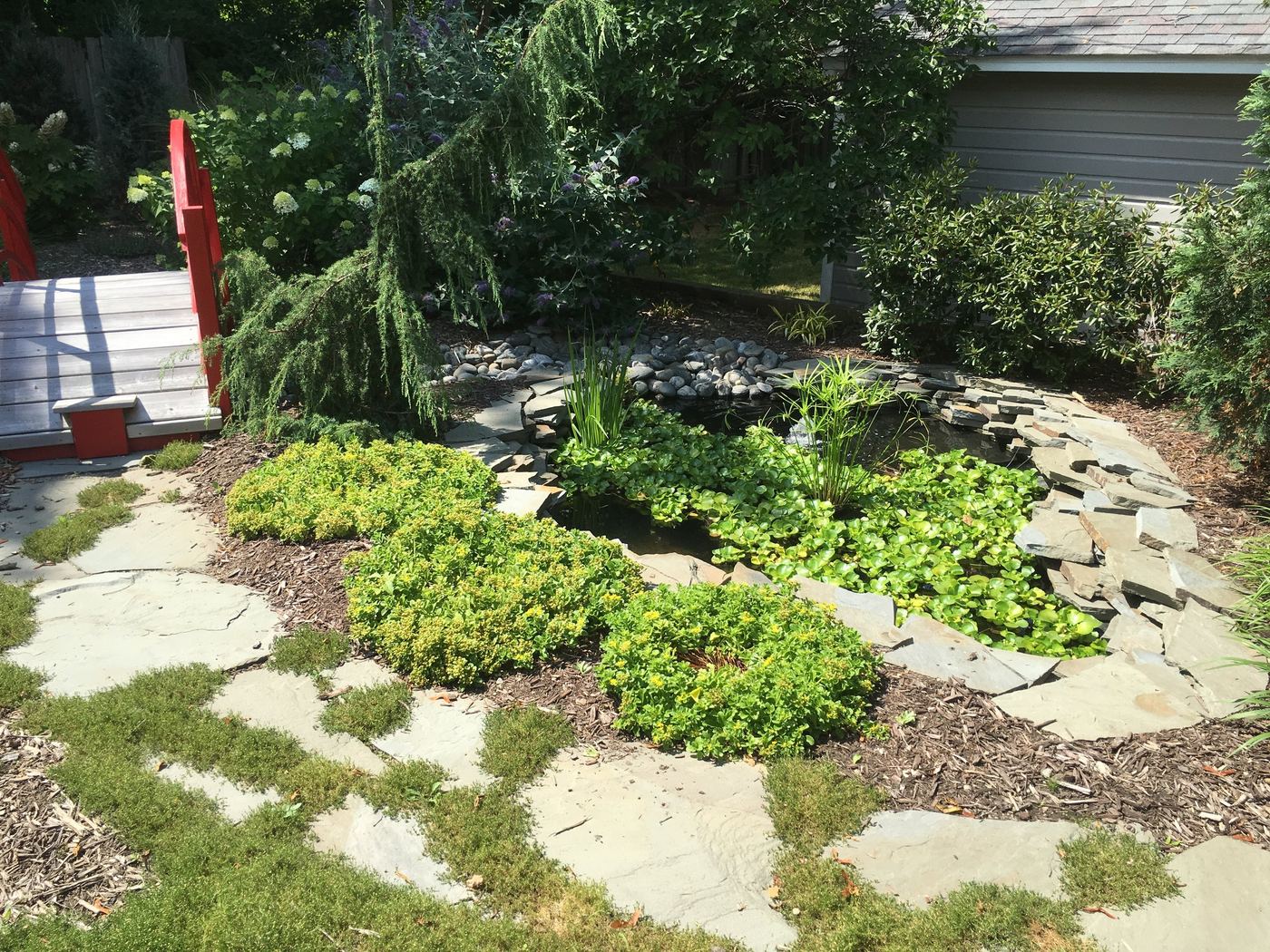
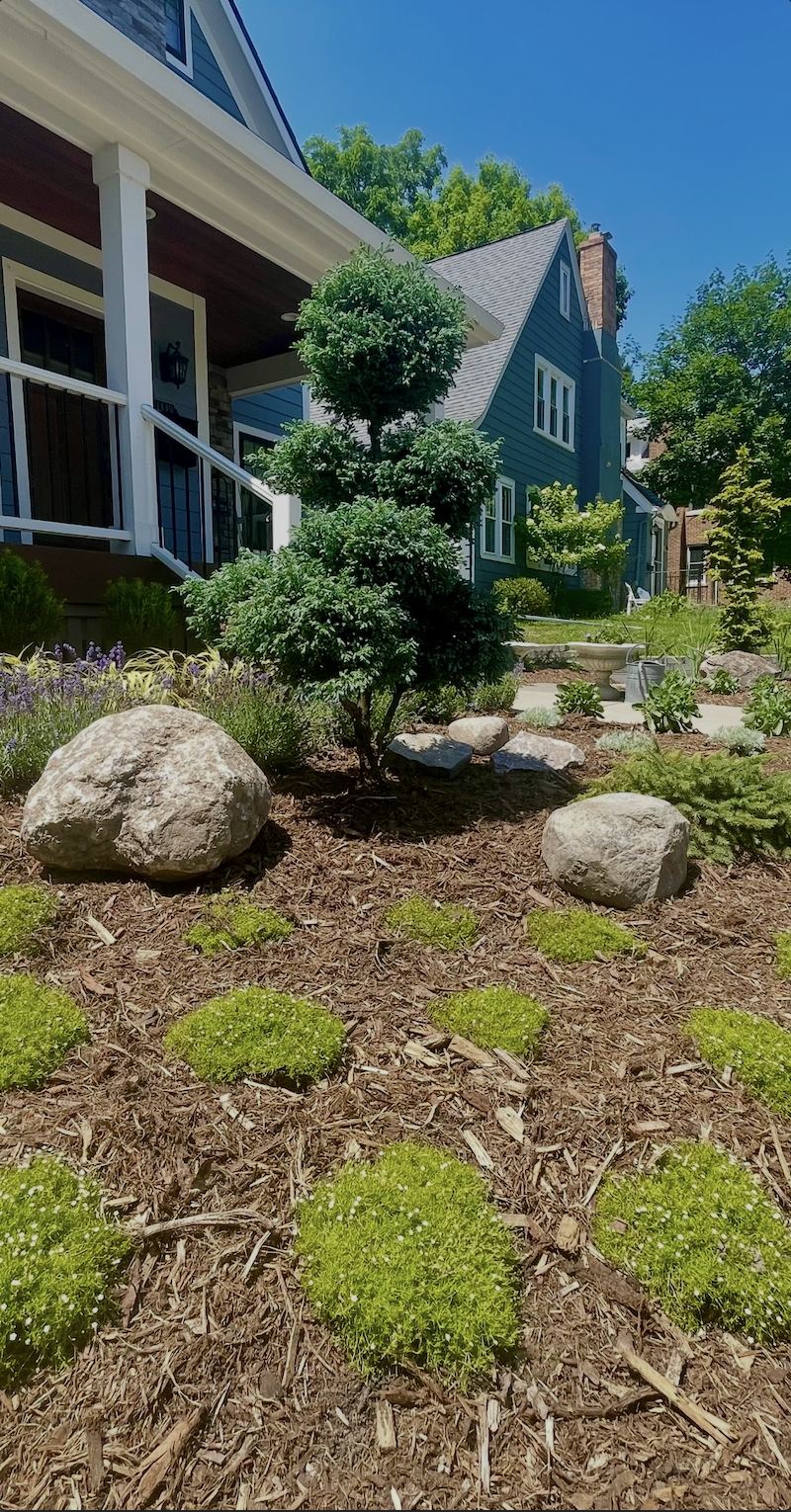
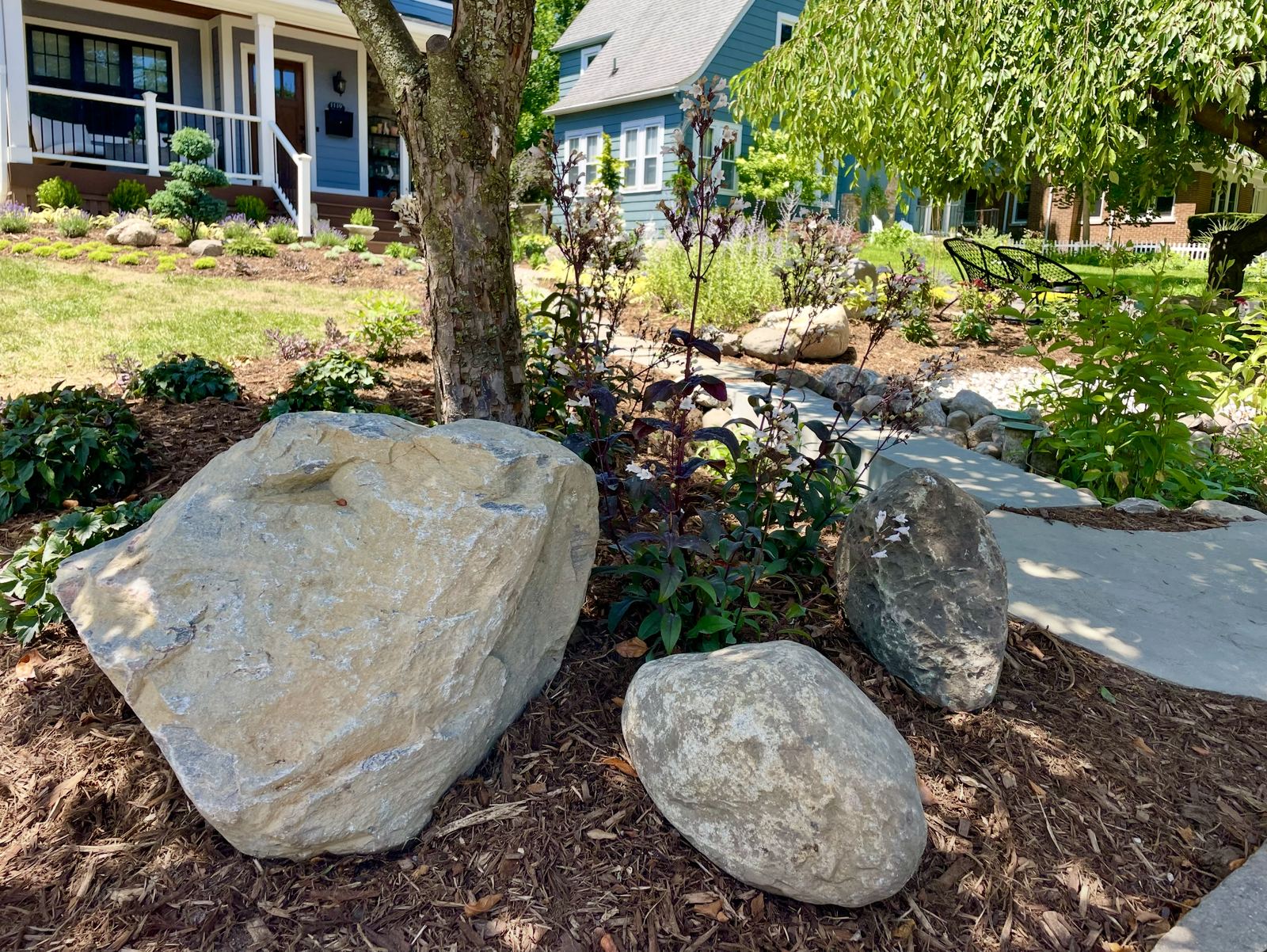
Drag the slider to explore this Japanese garden from two perspectives - the same finished space, captured from different vantage points.
BeforeAfter
Drag to compare
Japanese Gardens That Feel Like They've Always Been There
A well-designed Japanese garden doesn't look designed. It looks inevitable. The moss-covered stones, the gentle curve of a gravel path, the way a single ornamental maple anchors the whole composition - these things feel natural because they follow principles that have worked for centuries. Getting there, though, takes real knowledge of plants, materials, and how the eye moves through a space.
Aaron has been building Japanese-influenced gardens in Ann Arbor for over a decade. He draws on traditional Japanese design principles - asymmetry, negative space, the interplay between hard and soft materials - while selecting plants that actually thrive in Michigan winters. The result is something that looks authentic because it is, built with the right bones and the right plants for this climate.
Whether you want a small courtyard garden, a woodland setting, or a full property transformation, Aaron will walk your site, understand what you love about these gardens, and design something that fits your space as naturally as the stones fit the ground.
Custom planting plan with Japanese species selection
Stone placement and pathway design
Gravel, moss, and groundcover installation
Japanese maples, conifers, and shrub selection
Water feature integration (optional)
Lanterns, bamboo accents, and detail work
Care guide for long-term health
How a Japanese Garden Design Comes Together
Japanese garden design gets described as minimal, and that misleads people into thinking it is simple. It is the opposite. Every element is doing structural work and there is nowhere to hide a mistake, which is why the order of operations matters more here than in almost any other kind of garden.
Stone goes first, and it goes in slowly. In this tradition stone is the skeleton, not the decoration. Aaron sets the anchor boulders before a single plant is chosen, works out which face reads best, how deep each one sits, and how they group. A boulder buried to the right depth looks like it grew there. The same boulder set on the surface looks delivered. This is the step that takes the longest and it is the one that determines whether the finished garden reads as authentic.
The composition is built from where you will actually stand. These gardens are made of framed views, not open expanses, so the design starts from the kitchen window, the back step, the spot on the deck where you drink coffee. That is why a Japanese garden works beautifully in a side yard or a courtyard that would be too small for anything else. Acreage was never the point.
Then the plant list gets translated for zone 6a. The Kyoto palette does not survive an Ann Arbor February. Aaron substitutes hardy Acer palmatum cultivars, dwarf conifers, hakonechloa, and fern and moss in the shade, chosen so the garden keeps the same rhythm and texture through a Michigan winter. Deer pressure here is serious enough that it shapes the list as much as cold does.
Gravel, moss and groundcover finish it, and the pruning begins. A Japanese garden is pruned rather than mown, and the shaping is what keeps it intentional as it matures. Most clients have Aaron back a few times a season for structural pruning and moss care.
Aaron completed Michigan State’s five-year landscape architecture program and has been building Japanese-influenced gardens around Washtenaw County since 2008. He does the design and the installation both, which means the person who chose where the stone goes is the person watching it get set.
Yes. The principles travel even when the plant list doesn't. We're in USDA zone 6a here in Ann Arbor, so instead of the Japanese maples and bamboo you see in Kyoto photographs, we build with hardy substitutes that read the same way, cold-tolerant Acer palmatum cultivars, dwarf conifers, hakonechloa, moss and fern in the shade, and stone doing most of the structural work. Stone is the backbone of a Japanese garden anyway, and stone doesn't care about winter.
Far less than people assume. Some of the most effective Japanese gardens we build are courtyard-sized, a side yard between a house and a fence, or a single view framed from a window. The tradition is built around composed views rather than acreage. If you have a spot you look at every day, that's enough to work with.
It depends almost entirely on stone. Stone is the most expensive element by weight and by labor, and a garden built around several large placed boulders is a different project from one built around gravel and planting. The honest answer is that we scope it after seeing the site. Aaron will tell you what's achievable at the number you have in mind before you commit to anything.
More attention than a lawn, less work. A Japanese garden is pruned rather than mown. The shaping is what keeps it looking intentional as it matures. Most clients have us in a few times a season for structural pruning and moss care. It's a garden that gets better with age if it's tended, and looks neglected quickly if it isn't.
Ready to bring this kind of calm to your yard?
Aaron works personally with every client, March through November, across Ann Arbor and surrounding areas.