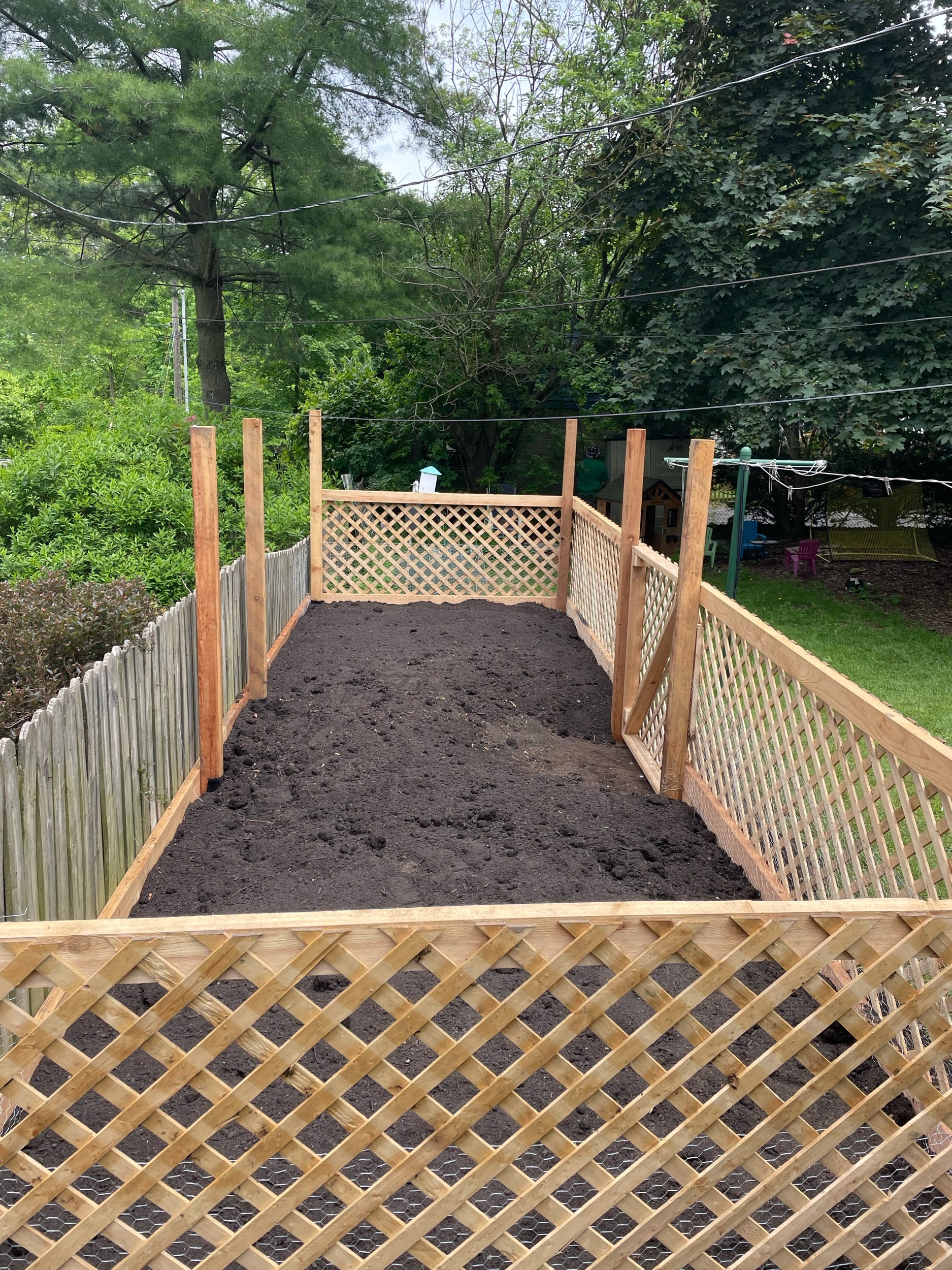
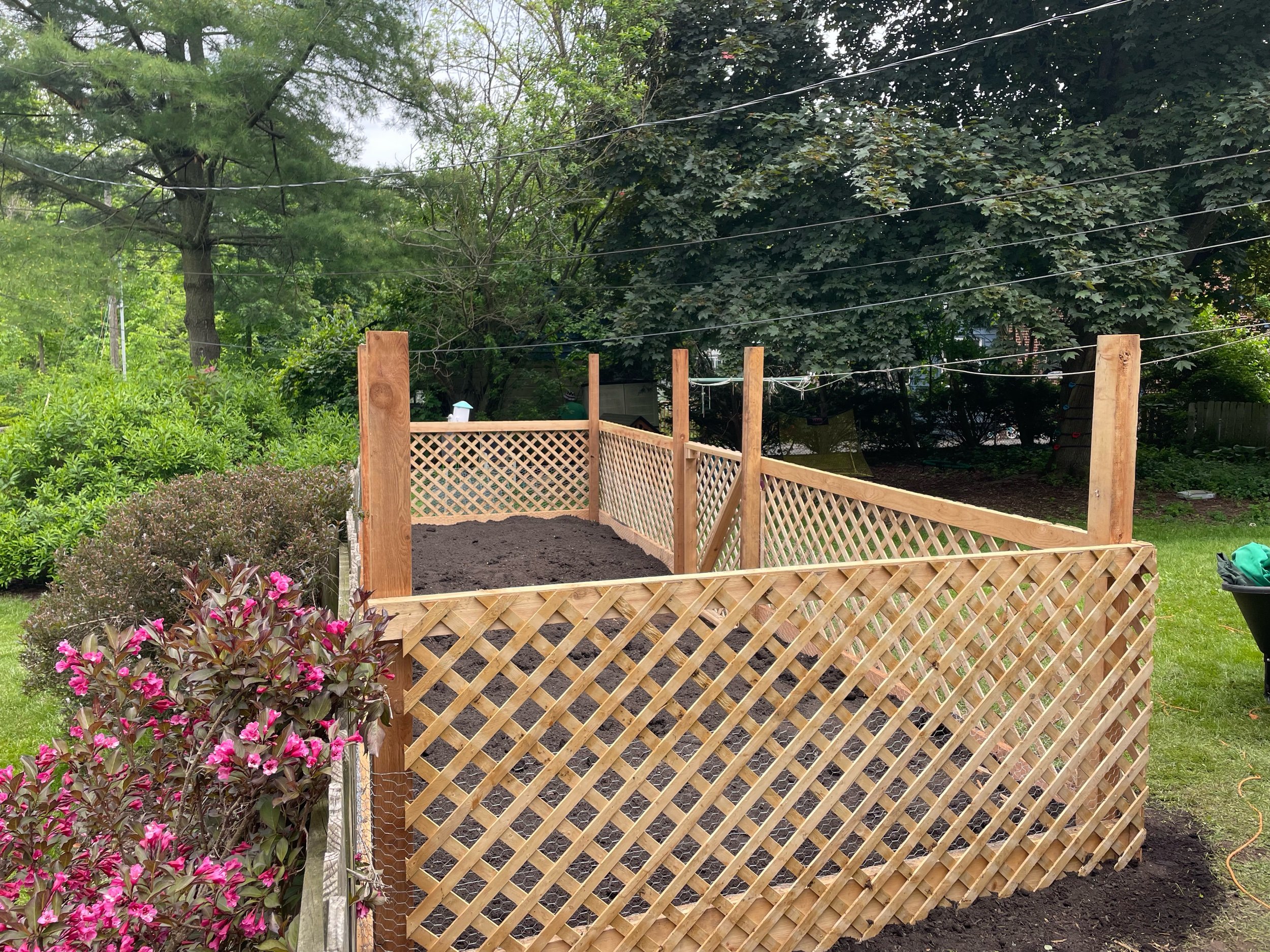
Raised garden beds and wood retaining walls that solve real problems - managing slopes, improving soil, creating defined garden spaces - all while looking genuinely handsome.
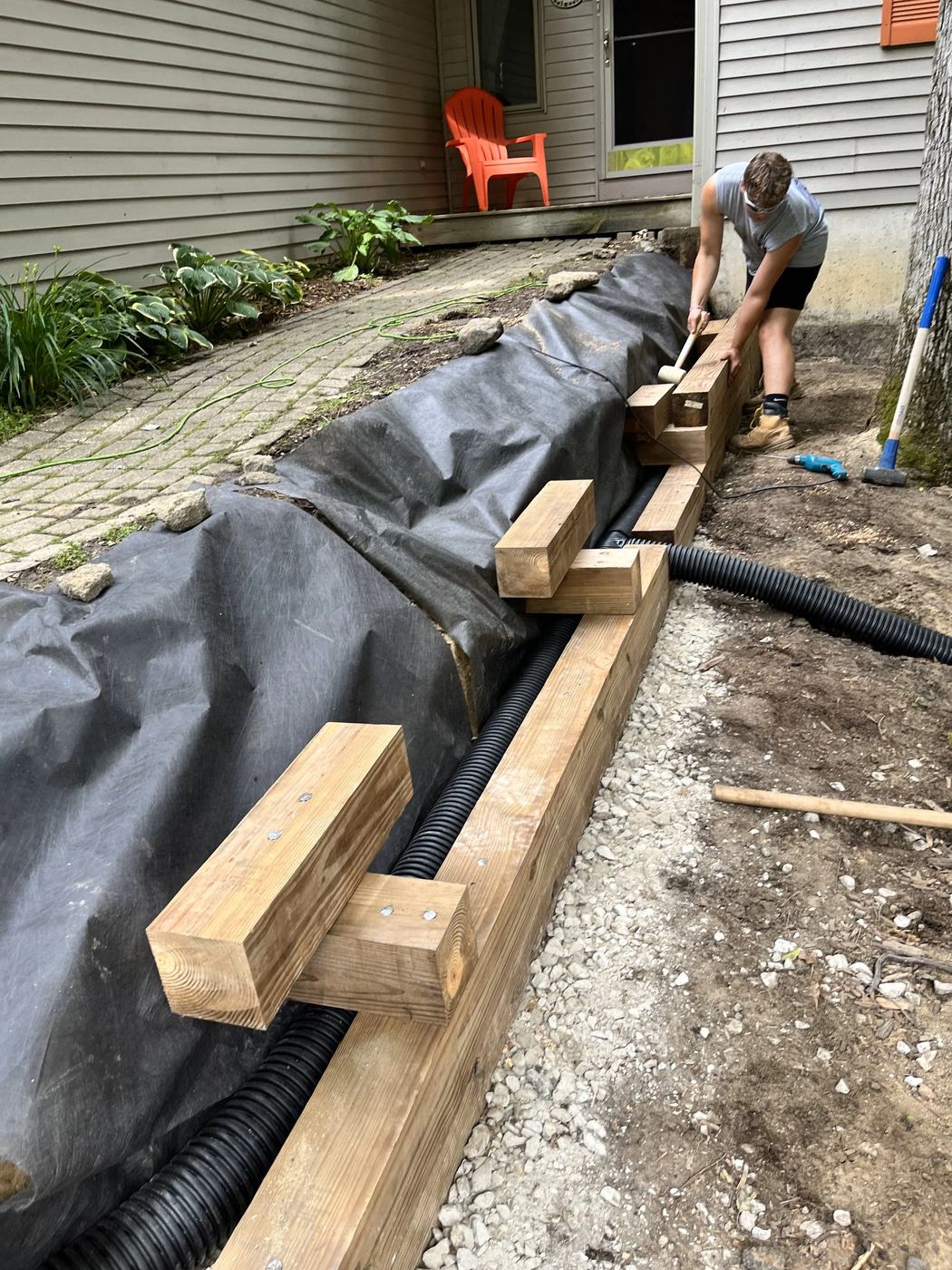
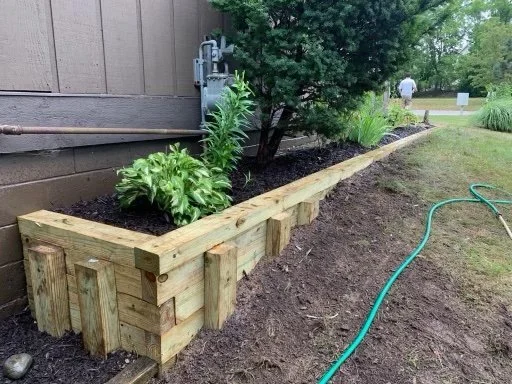
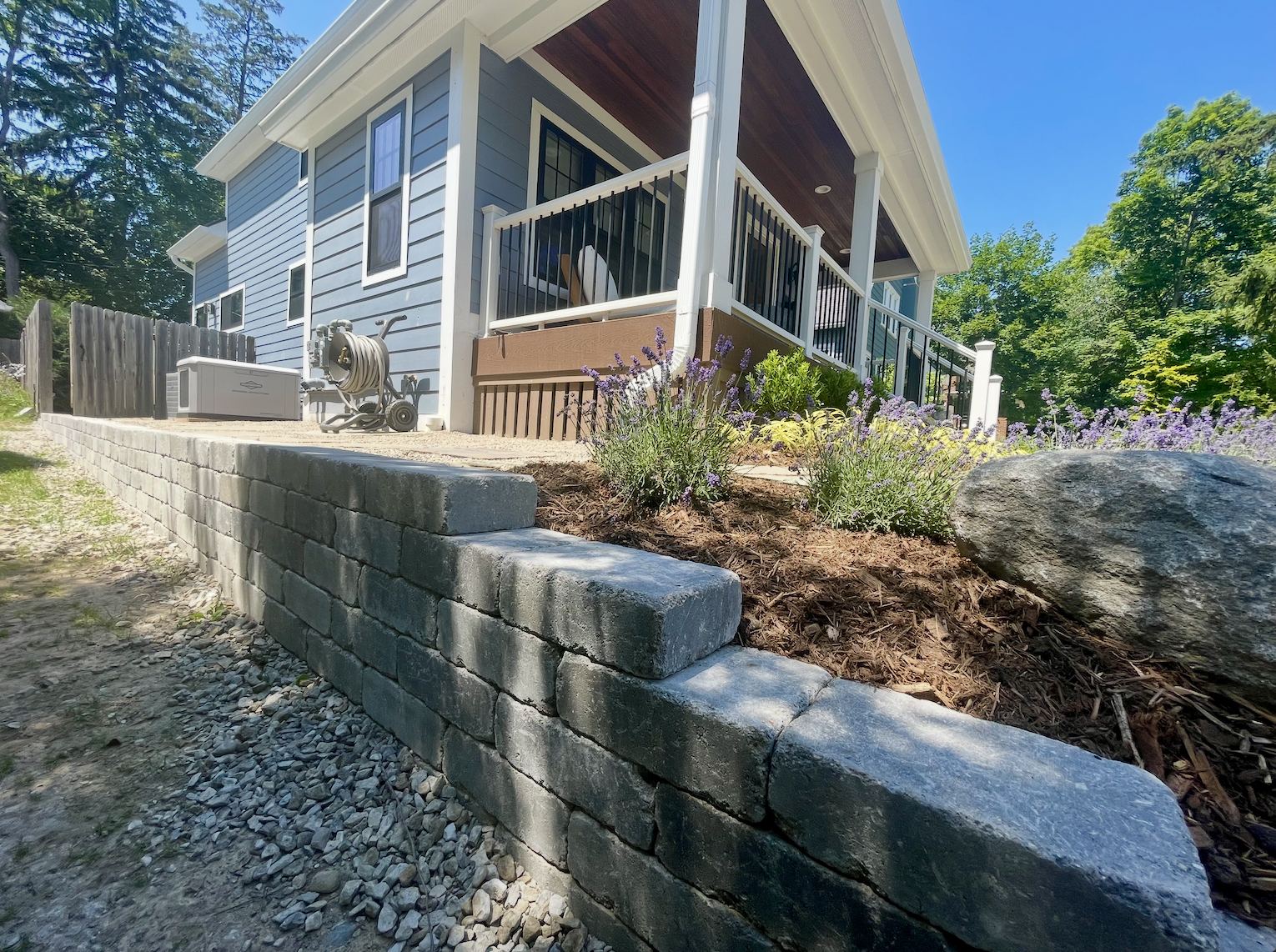
Drag the slider to see this retaining wall before the footing was even backfilled, and after Aaron's crew finished and mulched the bed above it.
BeforeAfter
Drag to compare
Form That Follows Function
Raised beds and retaining walls are both problem-solvers. A raised bed gives you control over your growing conditions - the right soil, the right drainage, the right depth for vegetables or perennials that your native clay doesn't support. A retaining wall holds a slope, prevents erosion, and turns an unusable grade into usable level space. When either is built well, the functional outcome and the visual result go hand in hand.
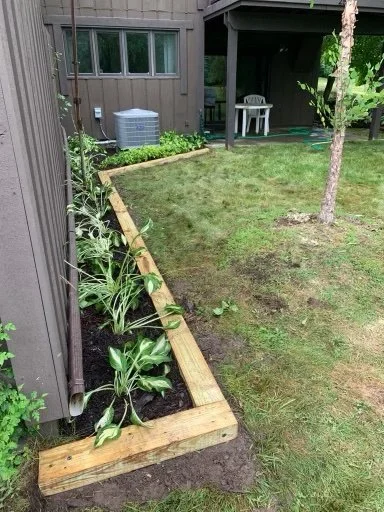
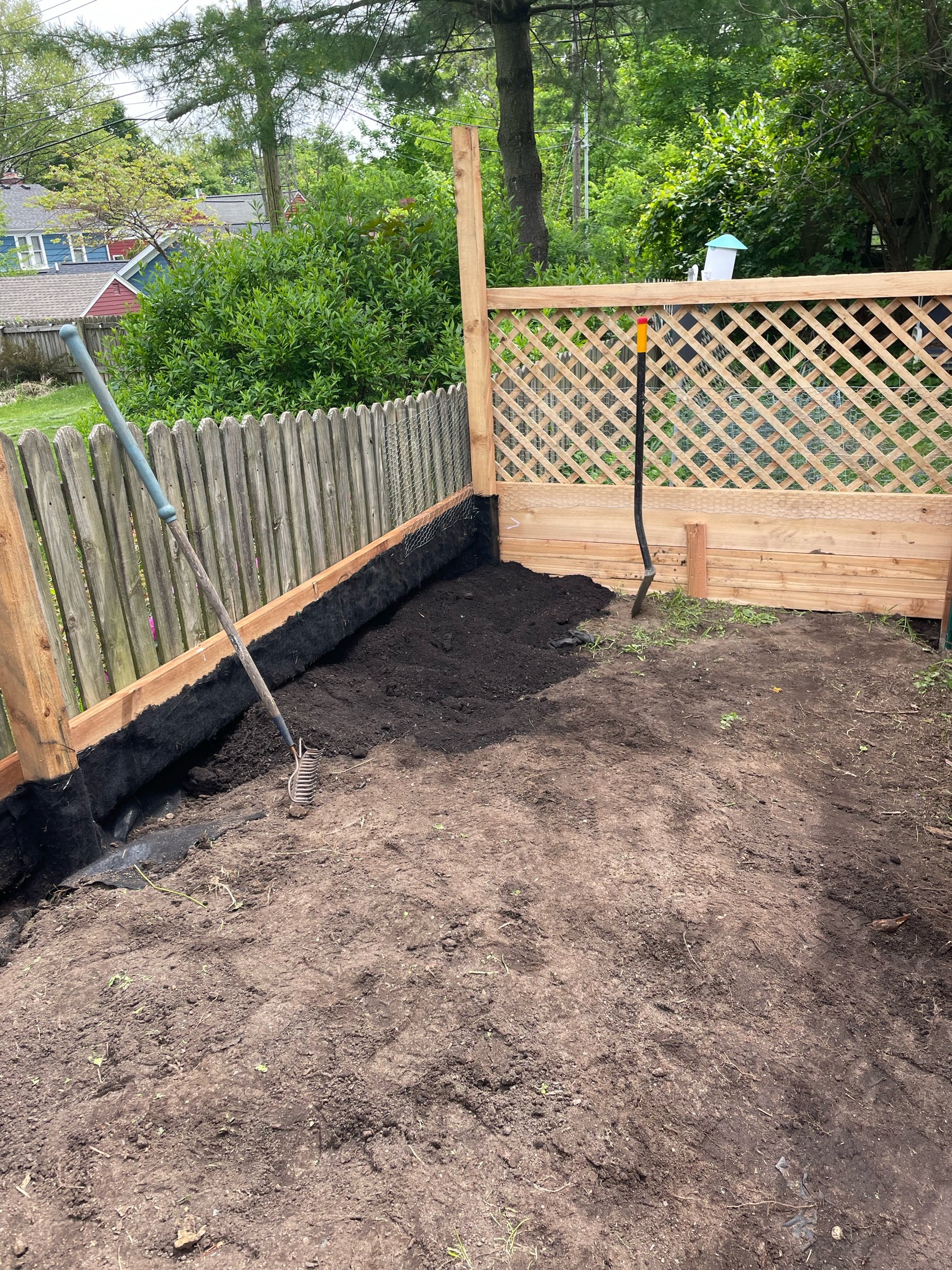
Aaron builds raised beds from cedar, locust, or other rot-resistant woods, using timber that's dimensioned and assembled to stay square and level for years without heaving or rotting out prematurely. He fills them with quality blended soil appropriate for what you're growing - not just topsoil, which compacts and shrinks. The result is a bed that drains well, grows vigorously, and stays tidy season after season.
Wood retaining walls work the same way: built right from the start, with proper batter, deadman anchors, and drainage behind the wall, they hold their position and character indefinitely. Aaron will assess your slope, recommend the right approach, and build it so you don't have to think about it again.
Cedar is the usual choice, naturally rot-resistant, ages to a soft grey, and safe around edibles. Black locust lasts longer still if you can source it. We avoid treated lumber in contact with vegetable soil, and we're happy to talk through the trade-offs rather than just defaulting to the cheapest option.
Thresholds vary by municipality, but as a general rule anything over about four feet, or any wall holding a slope with a surcharge above it, needs proper engineering. We check the local requirement for your property rather than guessing, because this is the one place in landscaping where getting it wrong is a genuine hazard.
Usually, yes, for two reasons. They warm earlier in spring, which extends a short season at both ends, and they let you build good soil rather than fighting the clay that's already there. Drainage is the other quiet advantage.
Twelve inches suits most vegetables. Eighteen to twenty-four is better for root crops or if you're building over compacted ground or hardscape. Deeper beds also dry out more slowly, which matters in July.
Ready to make the most of your property's terrain?
Aaron designs and builds raised beds and retaining walls that solve real problems and look great doing it.